
Stop Running Isolated B2B Ad Tests: Build Campaigns as a System

Why 'campaigns that worked' are often misread
B2B marketers are understandably drawn to examples of campaigns that deliver results. Pipeline pressure is high, budgets are scrutinized, and every team wants to know which channel actually works. As a result, a successful campaign is quickly translated into a surface-level conclusion: we need to do more thought leader ads, we need to try direct mail, we need to be present around events, or we need to add signal-based targeting.
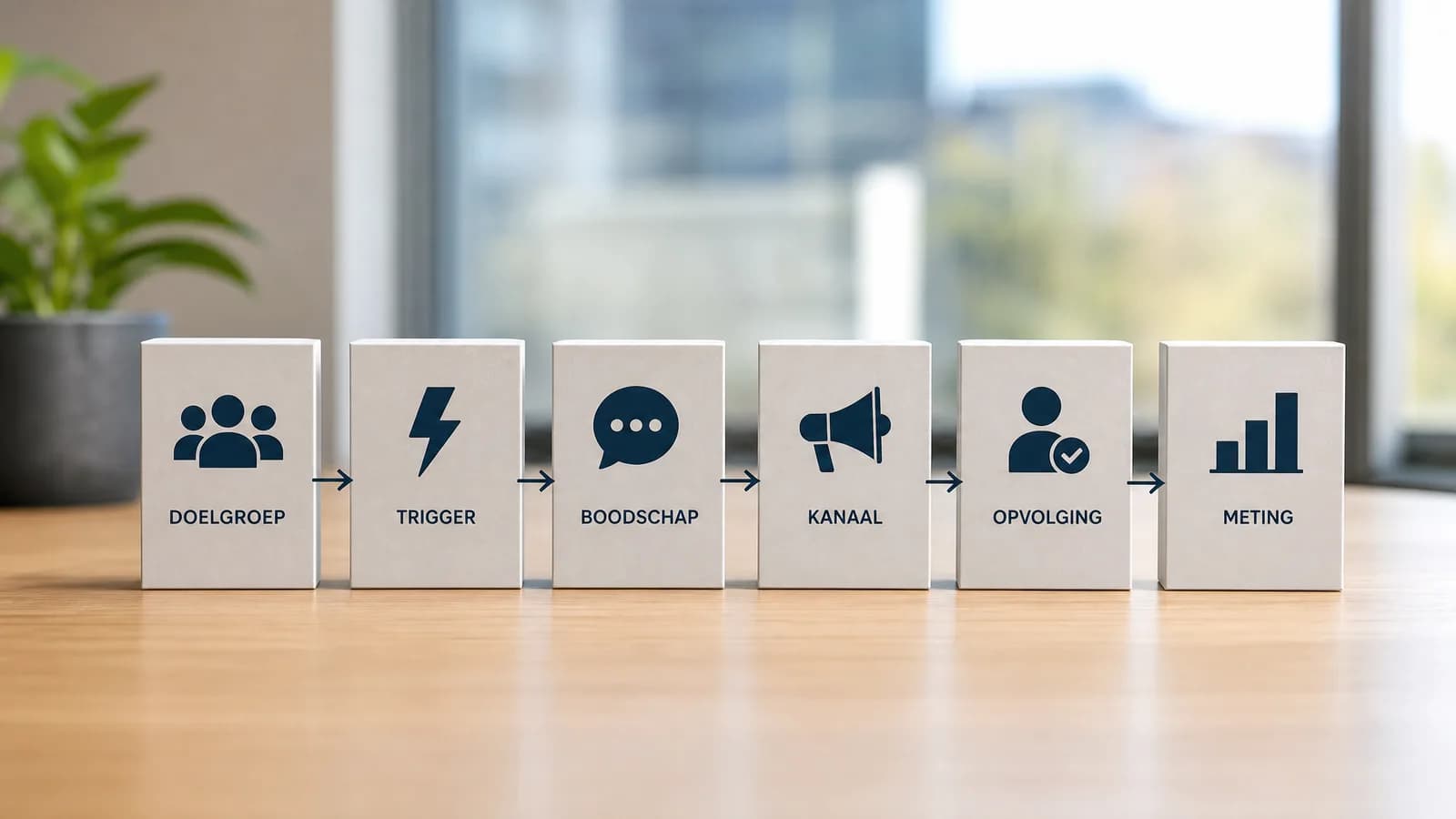
That reflex is dangerous. A campaign rarely works because one channel is inherently magical. The difference usually lies in the coherence between audience, timing, message, proof, distribution, follow-up, and measurement. Copying only the visible format means copying the surface. Understanding the design decisions underneath allows you to apply the same logic to a different market, a different budget, or a longer sales cycle.
For Funnel Adviseur, this is precisely where many B2B funnels stall. Teams test ads, build landing pages, send sales a list of leads, and call it a campaign. But there is no shared buying context, no clear next step, and no measurement model that looks beyond direct conversion. Paid media then becomes a series of isolated attempts rather than a reproducible growth system.
The campaign as a system, not a channel
A mature B2B campaign does not start with the question of which channel is cheap or popular. The first question is: which buying context do we want to activate? Is this an audience that hasn't yet clearly defined the problem, an account comparing alternatives, an existing relationship where expansion is possible, or a prospect who suddenly feels urgency because of a recent event? Without that context, creative stays generic and follow-up becomes arbitrary.
Next comes the connection between message and proof. In B2B, attention is often not enough. A prospect needs to believe that the sender understands the market, that the problem is recognizable, and that the proposed direction makes sense. That proof can come from a sharp observation, a customer story, a benchmark from proprietary data, a practical analysis, or a relevant invitation. The format matters less than the credibility.
Distribution must then match the behavior of the target audience. Some buyers respond to visibility in their professional feed. Other audiences are better reached through existing relationships, niche events, partner networks, or targeted account follow-up. A channel choice is therefore not just a media plan, but a hypothesis about where trust, attention, and timing converge.
What to and what not to copy from well-known B2B campaign formats
Influencer-led thought leader ads are a good example. The surface-level lesson is: put a well-known person in an ad. The better lesson is: borrow credibility and distribution from someone who already has attention within the target audience. That doesn't have to be a big name. In many B2B markets, a subject-matter expert, customer, consultant, or industry figure works better than a broad influencer. Copy the trust mechanic, not the person.
With CTV or broader surround-sound campaigns, the trap is that teams romanticize the channel. Not every B2B company has the budget, reach, or category maturity for broad video distribution. The underlying lesson is mental availability: ensure the same audience encounters the same core message at multiple touchpoints. That can happen through video, but also through content, retargeting, events, sales nurture, and partner communications.
Direct mail sequences are often reduced to the gimmick: a striking package, a gift, or a physical trigger. But in B2B, direct mail only works when relevance and timing are right. A generic package sent to a cold list feels expensive and arbitrary. A specific message sent to an account that has just shown a clear trigger can feel personal and logical.
A conference play without a booth illustrates the same principle. The value doesn't necessarily lie in a stand or a large sponsorship package, but in the question: how do we win attention where our audience is already gathered? That can mean a small breakfast session, a sharp guide, a meeting route, a partner dinner, or follow-up based on accounts in attendance. The event is then not a goal, but a concentration point of relevant attention.
Signal-based targeting often sounds technical, but the core is strategic. Behavioral signals are only valuable when they lead to a better message and a better next step. An account visiting a category page needs something different from an existing customer browsing integration content. The toolstack matters less than the discipline to translate signals into segmentation, creative, and sales follow-up.
The practical checklist for B2B campaign design
A campaign designed as a system can be evaluated with a simple but sharp checklist. One: which buying context does this campaign activate? If the answer is 'more leads,' you're not specific enough yet. Name the situation in which the audience becomes receptive: growth, reorganization, compliance, a new market, expiring contracts, low conversion, sales friction, or shifting customer expectations.
Two: which friction does the creative address? Good B2B creative is not just attractive or eye-catching. It makes a problem recognizable, challenges an existing assumption, or gives the prospect language to discuss the problem internally. This is especially important in longer sales cycles, where the first interaction rarely leads directly to a demo or proposal.
Three: what happens after the first interaction? This is where many campaigns leak. Someone clicks, views, downloads, or responds, but the next step is generic. A system campaign has thought in advance about nurture, sales context, retargeting, content depth, and account prioritization. Not every interaction warrants a sales call, but every meaningful interaction deserves an appropriate next step.
Four: which metric demonstrates progress without reducing everything to direct pipeline? Pipeline remains important, but not every campaign phase can be judged on that basis alone. For early demand creation, qualitative account engagement, involvement of the right roles, repeat visits, event requests, content consumption, or sales conversations may be better interim signals. The point is not to glorify soft metrics, but to measure honestly at each phase.

Steal the structure, not the surface-level tactic
The best way to make this practical is not to launch five new campaigns at once. Take one existing campaign and hold it up against the system. Is the audience specific enough? Is it clear which trigger is being addressed? Does the creative prove something the prospect didn't already believe? Does the landing page deliver on the ad's promise? Does sales know the context of an interaction? Are the metrics appropriate for the phase?
If any of those elements is missing, you don't necessarily need to switch channels. Improving the campaign architecture often delivers more value. A LinkedIn campaign with better segmentation, stronger proof, and smarter follow-up can outperform a completely new channel. An event activation with clear account selection can outperform a larger booth. A direct mail action with sharp timing can outperform a more expensive gimmick.
Sustainable demand generation is not a collection of ad formats. It is a design discipline. Teams that get better at it need to chase fewer hacks. They build a way of working in which every channel plays a role within the same go-to-market motion.