
Used EV: choose one verifiable vehicle record across every channel

The choice: one vehicle record, no channel versions
Choose one verifiable vehicle record for each vehicle in stock and let the website, portals and showroom conversation derive from it. Start with the registration number, powertrain, trim level, asking price, mileage and the information you can genuinely substantiate about charging, battery, warranty or delivery. The supplied research on used EVs identifies purchase price, range and mileage as the most decisive selection factors; those three fields therefore deserve fixed, identical wording. This is an editorial working choice for presenting your stock, not proof that consistent data in itself drives sales results.
Make verification a fixed publication step
Use the registration check as a verification source for the general vehicle details visible there. According to RDW, the check is free with a Dutch registration number and shows, among other things, general, technical, tax, engine and environmental information, plus an assessment of the mileage. When buying a vehicle, RDW also identifies the registration check, mileage and maintenance history as points of attention. This supports a practical boundary: do not publish as though every detail follows from one public check. For example, only record battery status, charging accessories, maintenance documents and warranty if your own file or inspection supports them. For fully electric imported cars, the tax explanation may also differ from that for a used car bought in the Netherlands; the supplied government information specifically discusses that situation, so do not turn it into a general advertising rule.
The tool: the channel decision log
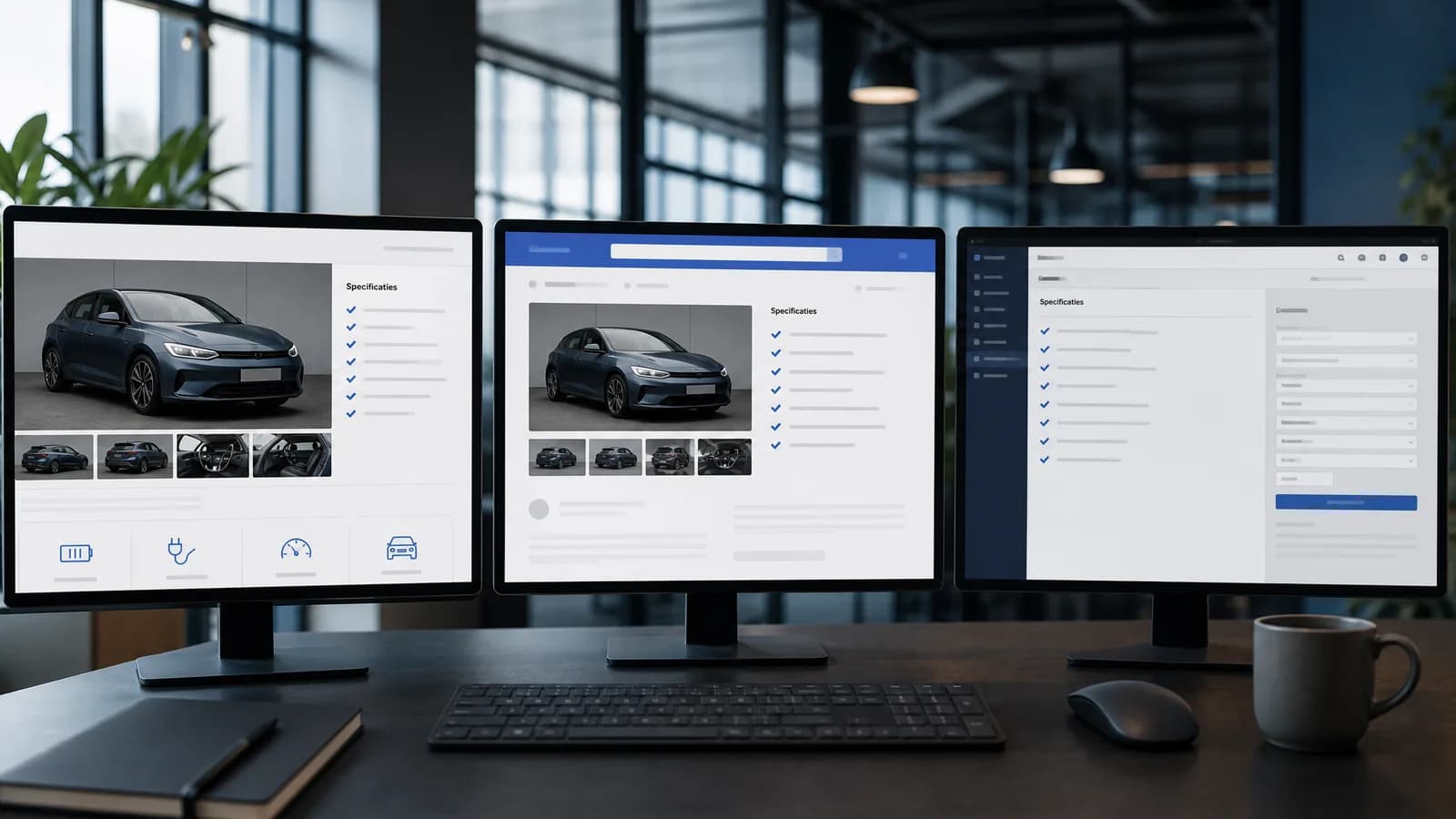
Use this log on arrival, before online publication and after every change: record the registration number, source, owner, checkpoint, discrepancy by channel and follow-up decision for this EV or plug-in hybrid. Have the responsible person publish only once the price, range wording and mileage match the verified vehicle record on every channel. If a detail has not yet been confirmed, omit it or provide an explicit explanation rather than filling it in based on an assumption. This approach is intended to provide consistent information around presenting used cars in the Netherlands; the supplied passages make no statement about individual vehicle quality, battery condition, contractual terms or the commercial outcome of this approach.
Further reading
Sources
- Tips for buying a used car | RDW
- RDW Registration Check | view your vehicle details at RDW | RDW
- Choice study on electric vehicle (EV) adoption behaviour - Used cars | Government of the Netherlands
- I am buying a used car as a private individual. Which taxes do I have to pay? | Government of the Netherlands
- Source video
- Source video (historical reference)