
Choose AI models by task: build a router teams can audit

Start with the error you can still correct
The core conclusion: choose AI models by task and by the consequences of errors, not by name or popularity. A lighter route may be suitable for an initial internal summary; customer communications or decisions with consequences that are difficult to reverse require predefined review or escalation. This is a work recommendation, not a ranking of models. The supplied routing research describes the need for selection that weighs cost, latency, accuracy, and ethical considerations against one another. It does not state which model is the best choice for your organization.
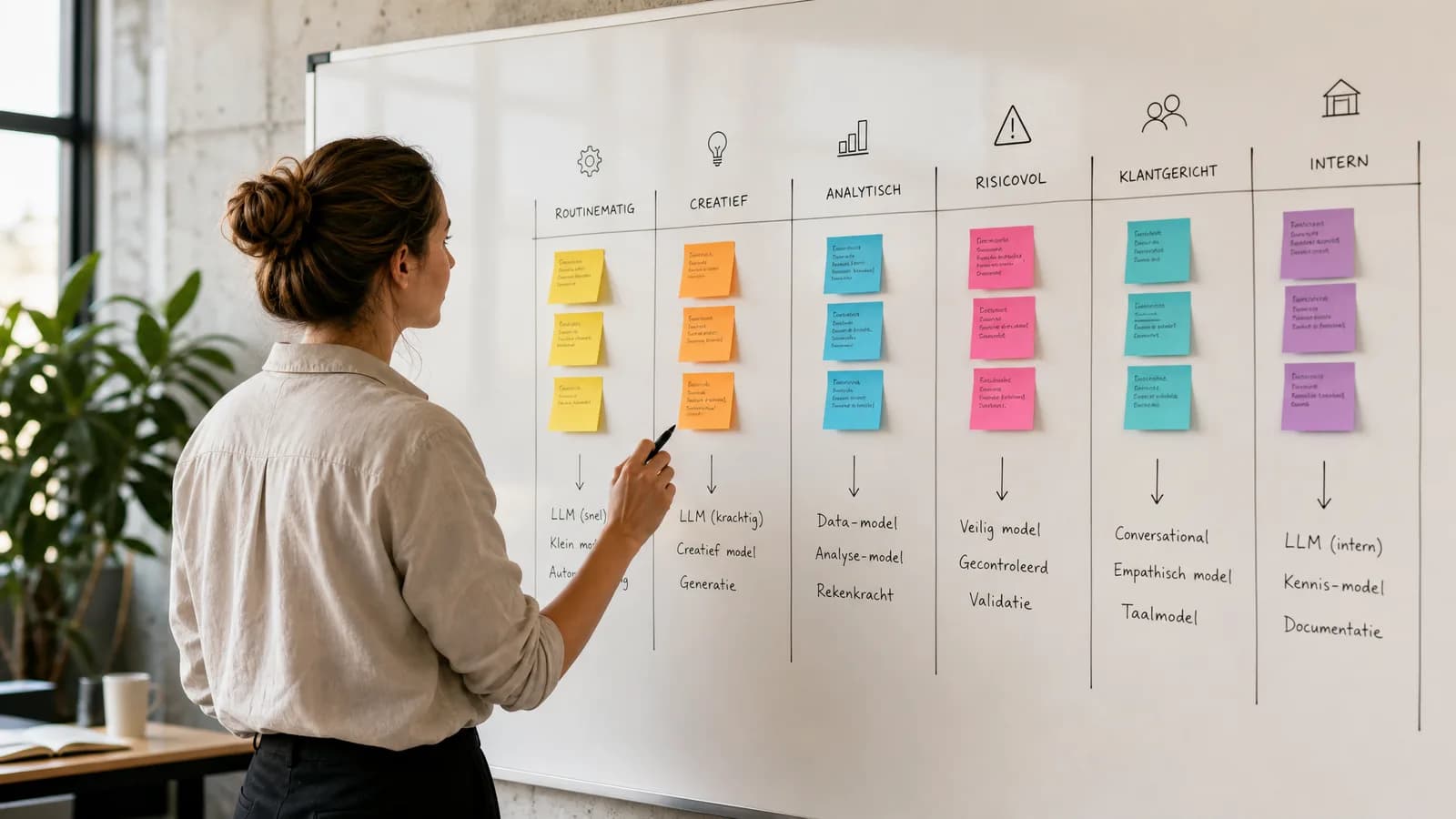
Turn six questions into one standard route
For every recurring task, answer: what is the task type, what do errors cost, how much reasoning or context is needed, how quickly must the outcome be available, what data level may be included, and who reviews it? Then choose a model route and a fallback to a human or another route. Assign an owner who may adjust the route based on observed errors, delays, or unnecessary review. NIST describes the AI RMF Core as four functions — govern, map, measure, and manage — and emphasizes that the actions are neither a checklist nor a required sequence. Use it as a framework for thinking about risk management, not as a prescribed router design.
Document the choice and test only what you actually use
A useful tool is this routing sheet, with one line per task: “Work step: [name]; error impact: [low/medium/high]; context needs: [brief/extensive]; turnaround time: [now/can wait]; data level: [permitted level]; primary route: [model or human]; review checkpoint: [who and when]; fallback: [alternative route]; owner: [name]; review date: [date].” Start with three frequently used tasks and discuss specific deviations on the review date. The supplied sources provide a general framework for AI risk management and routing trade-offs, but do not test specific models, vendors, or organizational contexts. The routing sheet therefore does not replace your own evaluation of your tasks, data, and workflow.


